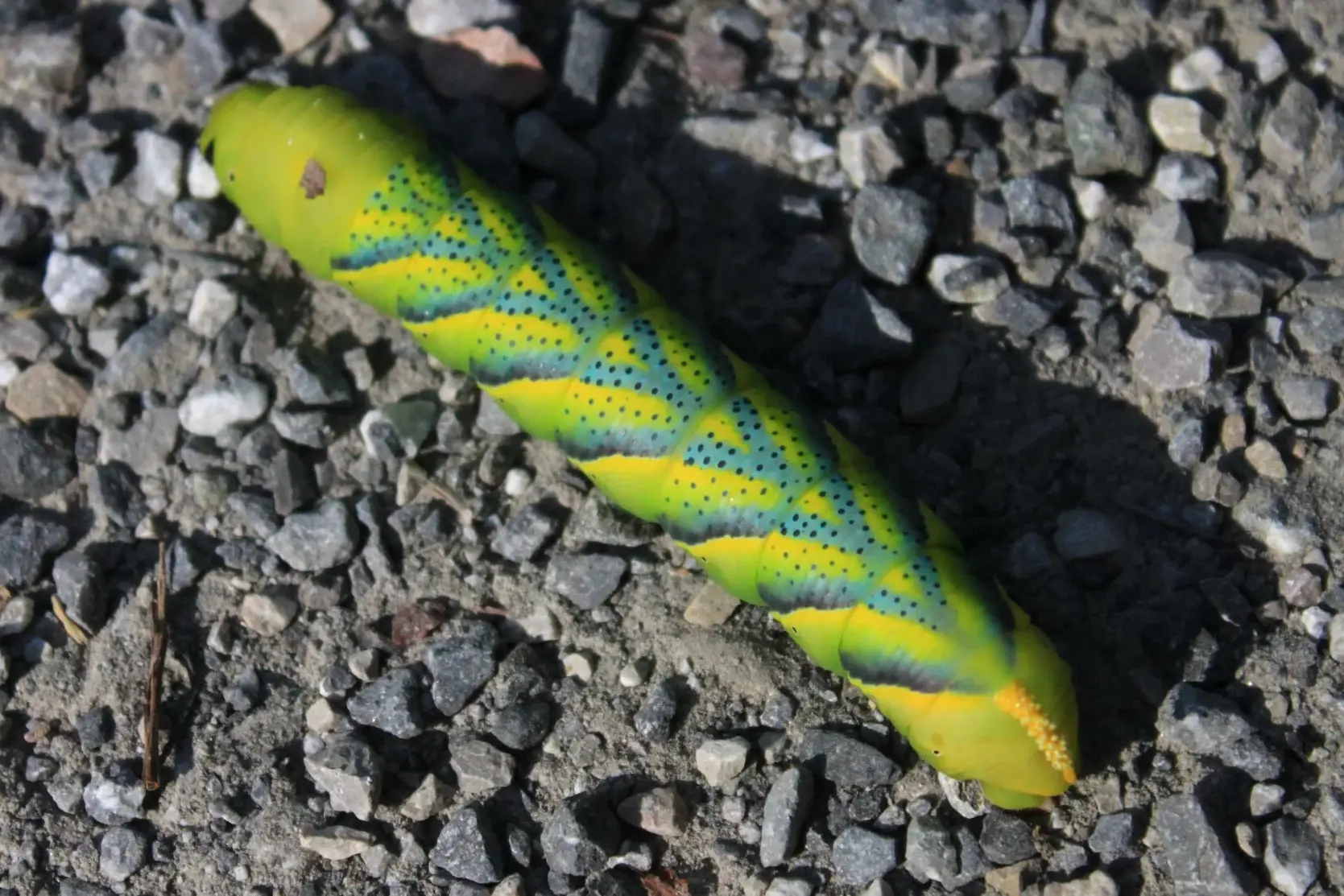
African death’s-head hawkmoth (Acherontia atropos)
The upper wings of the african death’s-head hawk moth are gray-brown in color. The lower wings are bright yellow with black stripes. The underside of the moth is also bright yellow with black stripes. The moth’s back features the skull and crossbones that give it its name. The moths have a wingspan of between 90 and 130 mm. The caterpillar of the death’s-head hawk moth is also very special. They can reach a length of between 120 and 130 mm. They have a greenish to yellow base color and are decorated with a turquoise “V pattern.” A horn forms on the rear end.
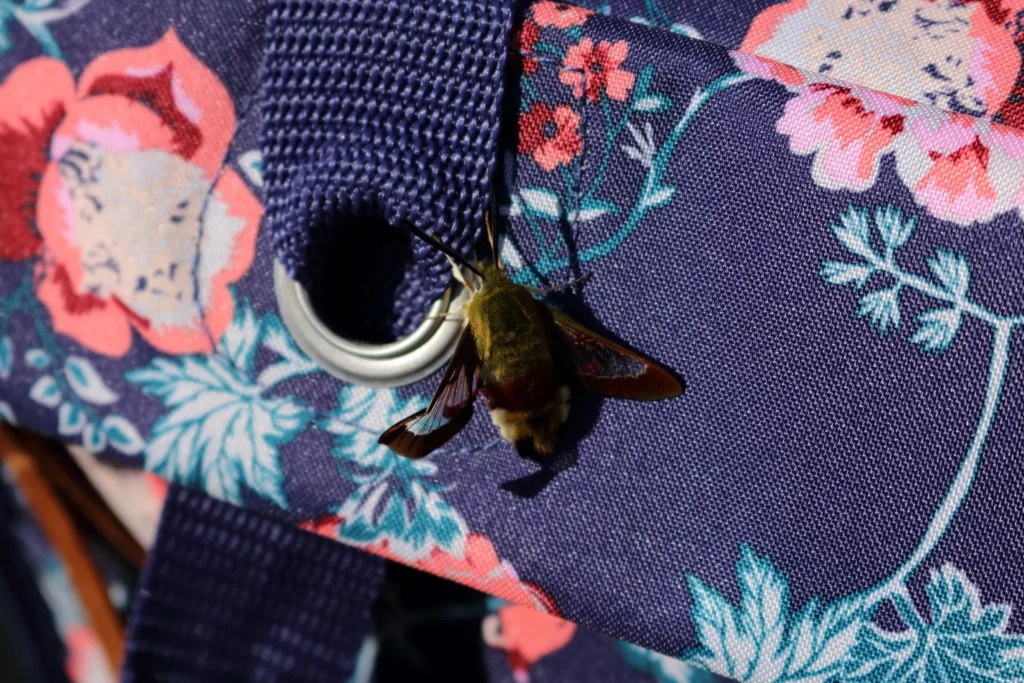
broad-bordered bee hawkmoth (Hemaris fuciformis)
The broad-bordered bee hawkmoth is a moth from the hawk-moth family. This species is one of four exclusively daytime-active hawk-moth species found in Europe. Its wings are partially transparent, with brown-colored tips. The moth’s body is greenish in color with a red stripe running across it. Its wingspan ranges from 38 to 48 mm. The caterpillar is light green in color and has a horn on its rear end.
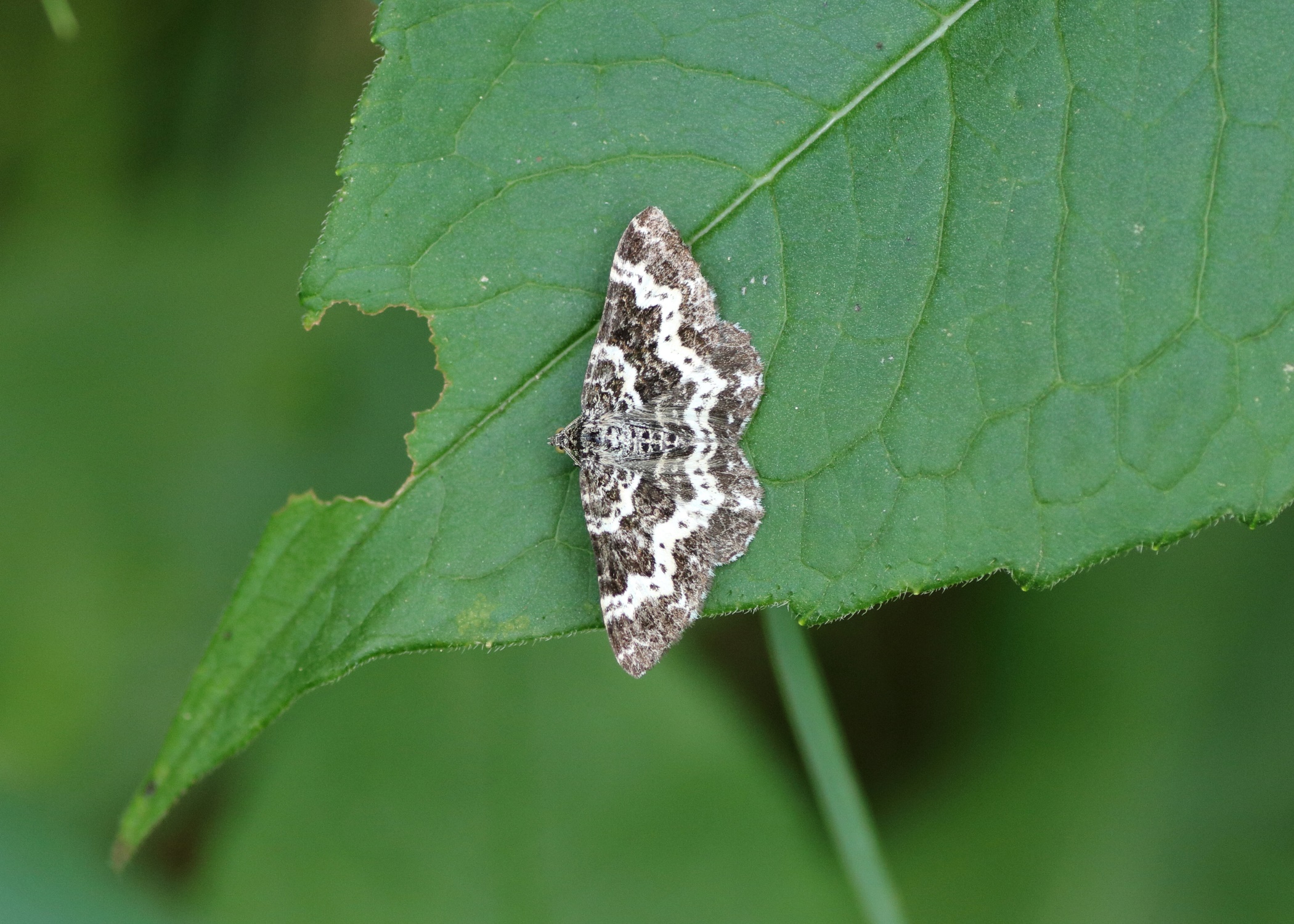
Common carpet (Epirrhoe alternata)
The common carpet moth is a moth from the family of geometridae. Its wingspan is approximately 25 mm. The wings are gray in color and have white bands. The moth lives mainly on the edges of forests and in hedges. However, it can also be found in gardens and parks. The caterpillars feed on various species of bedstraw.
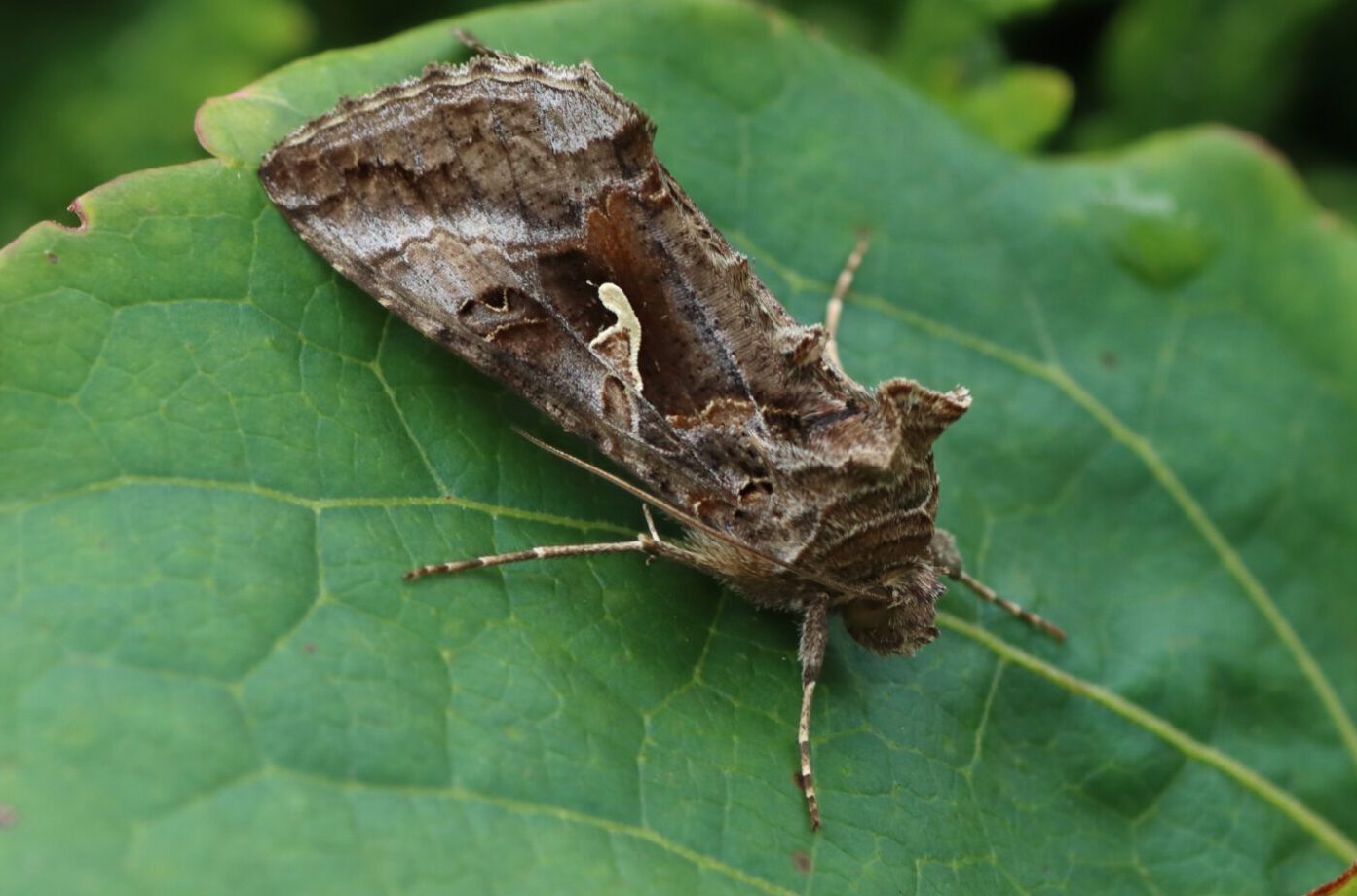
Silver Y-moth (Autographa gamma)
The gamma moth is a moth from the family of owlet moths. Its wingspan is between 35 and 40 mm. The wings are brown with spots and have a white gamma symbol on them. The moth is a migratory moth that is quite common in Germany. The gamma moth can also be found in gardens and parks. The caterpillars feed on various plant species. These include nettles, dandelions, and cultivated plants such as lettuce. The caterpillars are nocturnal and can be found during the day mainly under the leaves of their food plants.
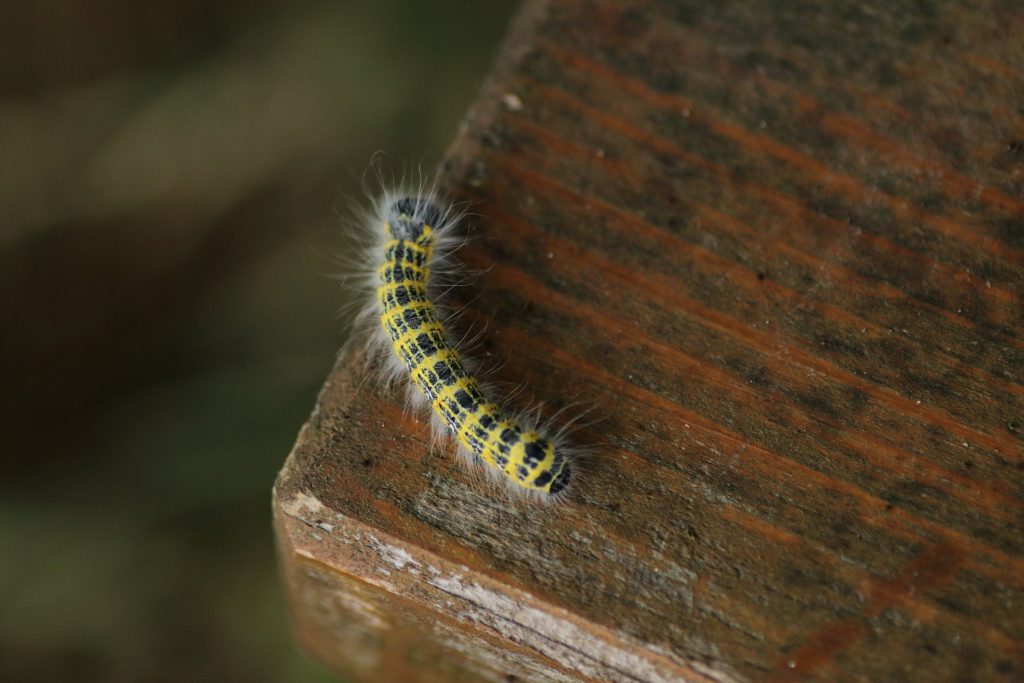
Buff-tip (Phalera bucephala – caterpilar)
The buff-tip moth is a moth from the family of notodontidae. The species can reach a length of up to 32 mm. Its wingspan is between 55 and 69 mm. The front wings are gray in color and have two eye spots at the end of the rear wings. The caterpillars are yellow in color and have black longitudinal stripes. They are also covered with long, white hairs. The caterpillars are active from July to August. Their food plants include various tree species.
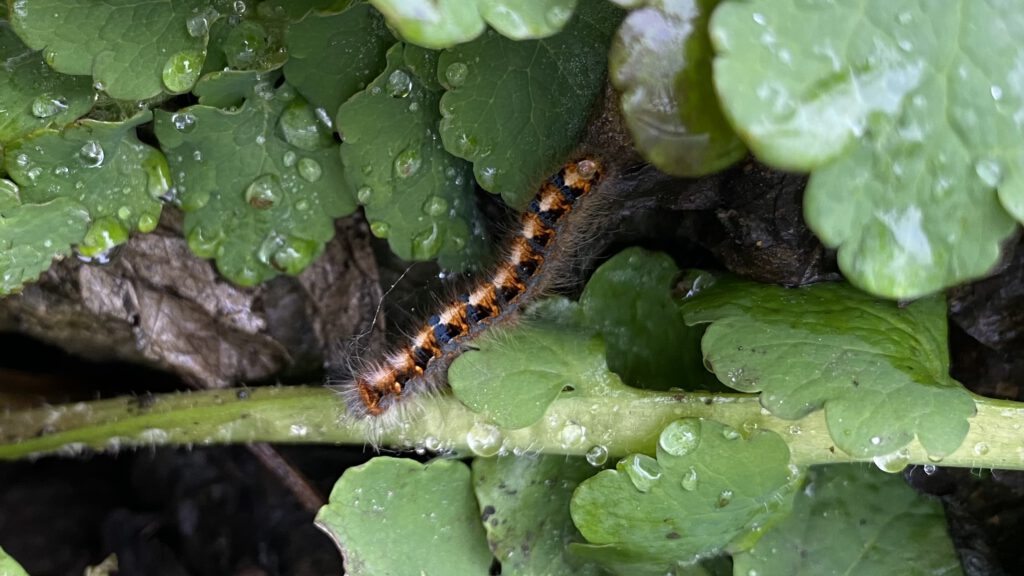
Oak eggar (Lasiocampa quercus – caterpilar)
The oak eggar moth (not to be confused with the oak processionary caterpillar – Thaumetopoea processionea) belongs to the family of Lasiocampidae. The moth can reach a wingspan of 45 to 75 mm. The moth is dark brown on the upper side and has a light brown band running along the edge. There are also two white spots on the wings. The underside of the male is light brown. The females are ochre in color. The caterpillars hibernate as young caterpillars. They have dense hair, which can be irritating to humans.