High brown fritillary (Fabriciana adippe)
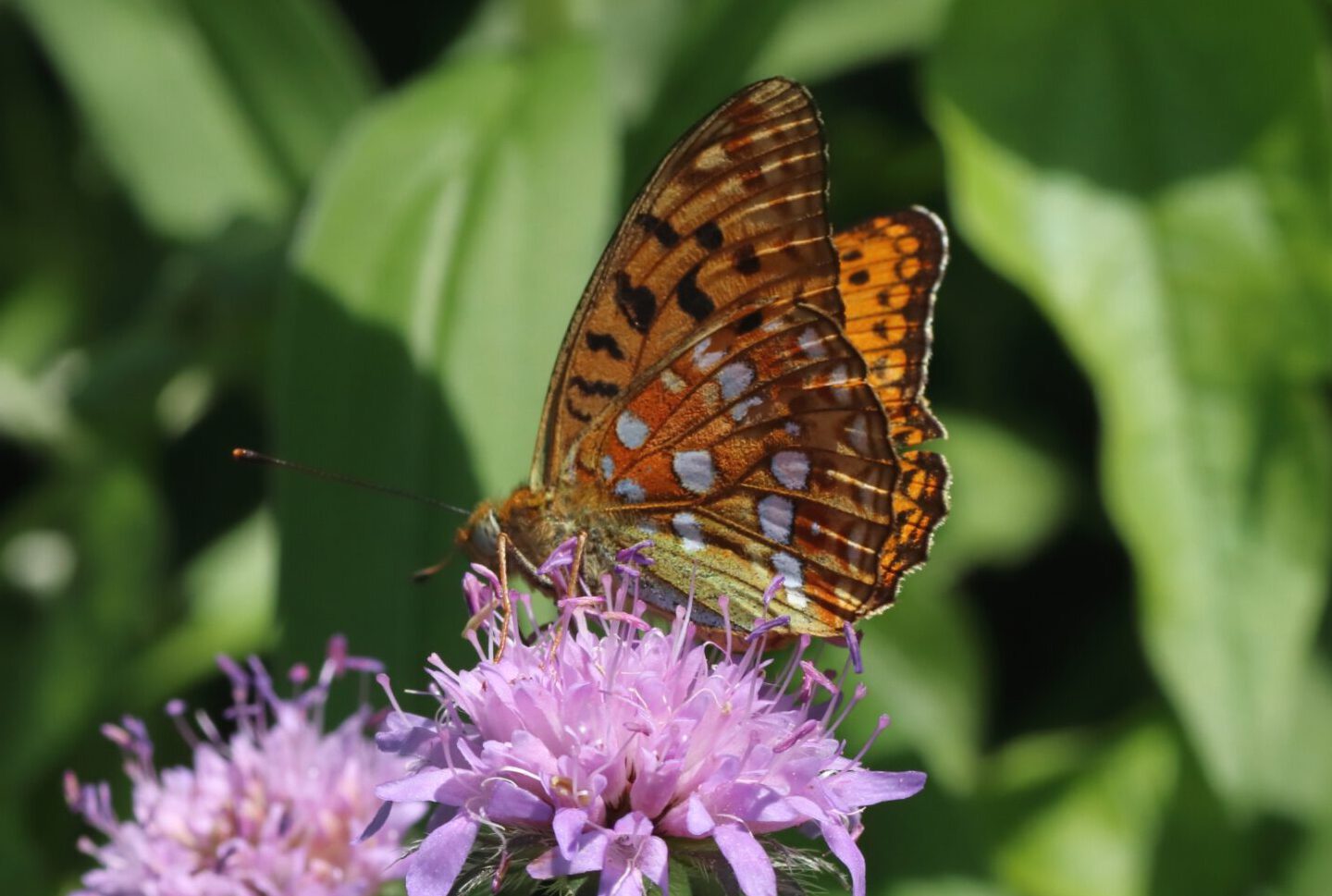
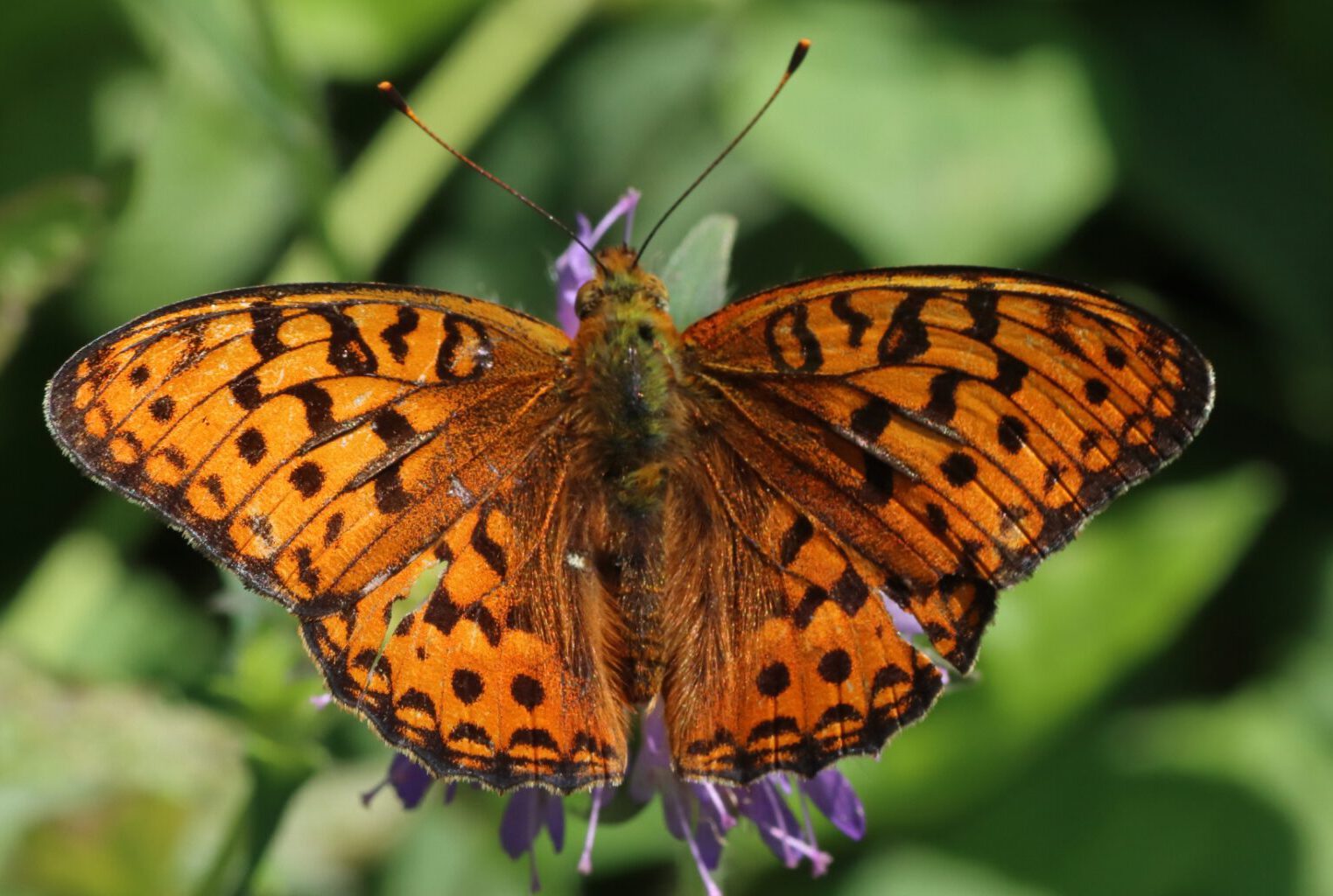
Small “pearlescent” wing spots are visible on the orange underside of the hind wings. The upper side is orange in color and covered with small black spots. The moths have a wingspan of between 40 and 45 mm. The fiery pearl-bordered fritillary can mainly be seen on composite flowers and thistles from mid-June to August. The butterfly is already classified as an endangered species on Germany’s Red List. This species is also already critically endangered in Great Britain ~
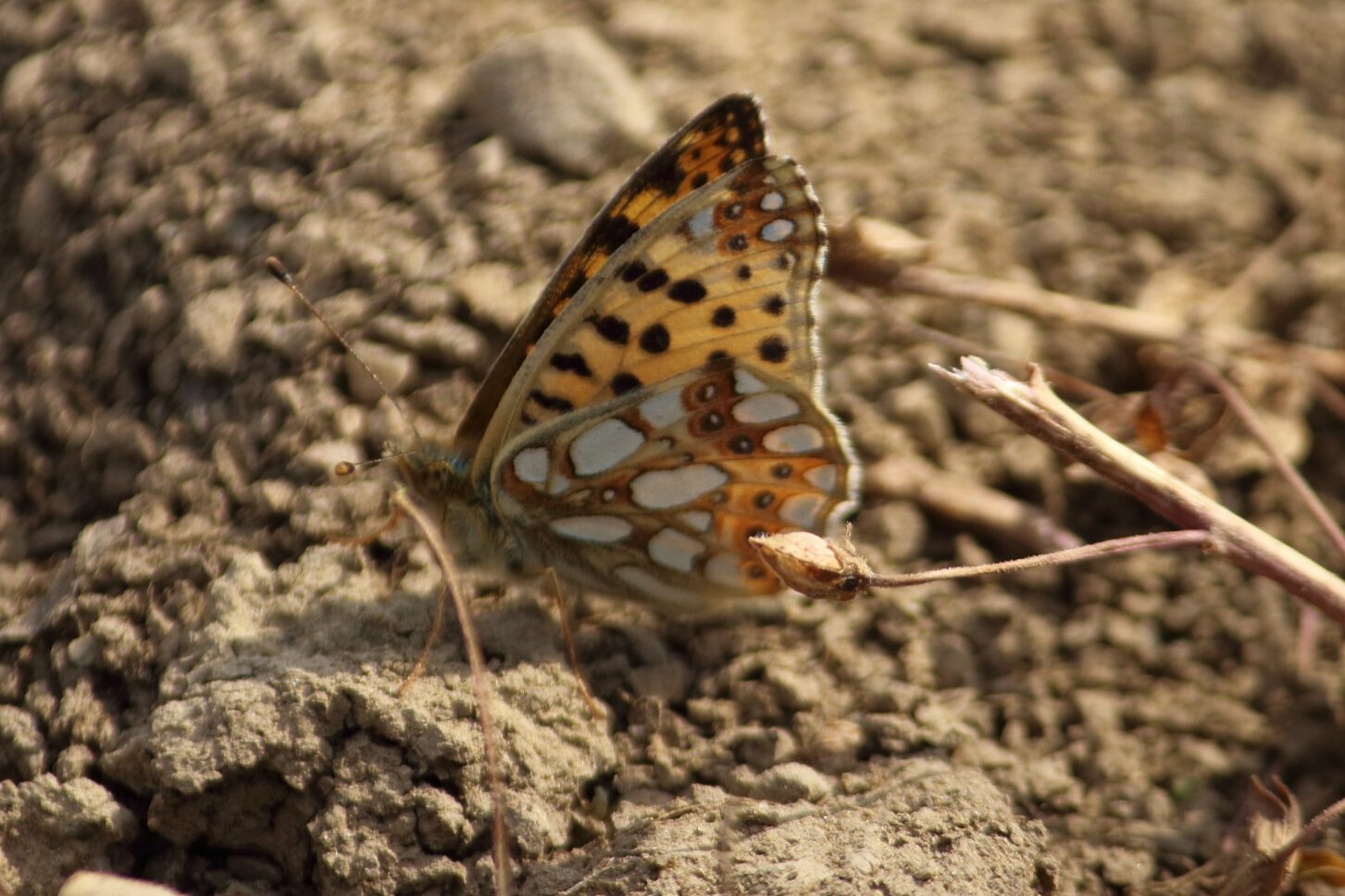
Queen of Spain fritillary (Issoria lathonia)
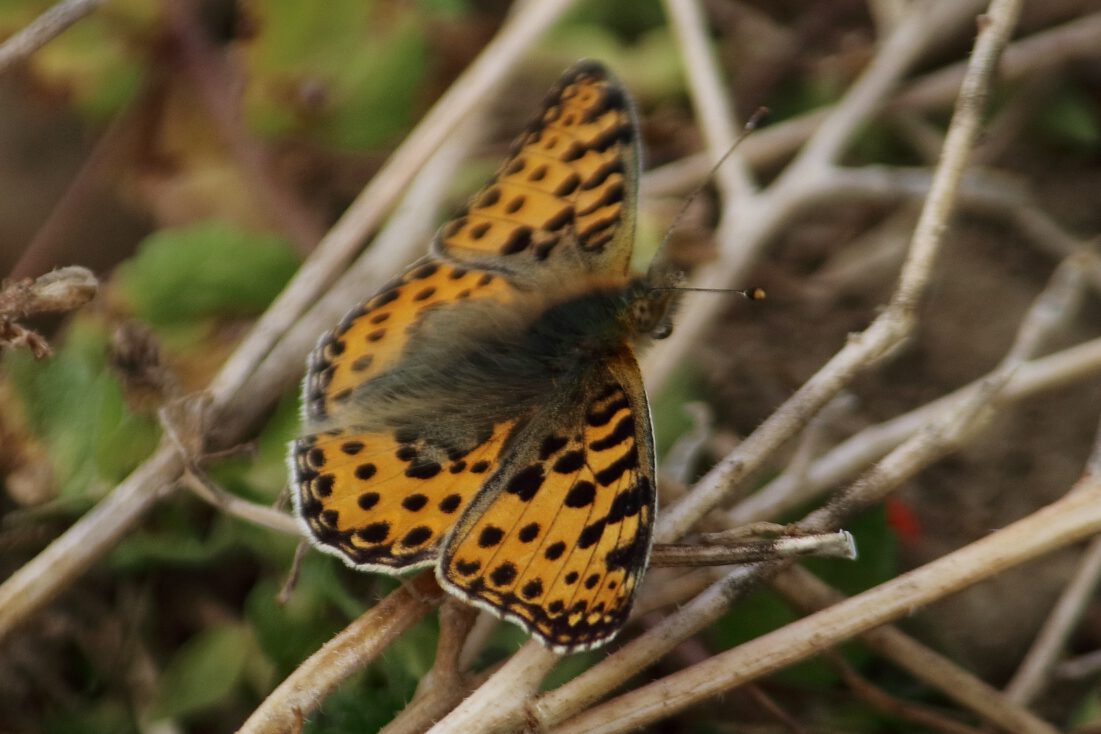
The upper side of the wings is covered with a multitude of black dots. The pearlescent spots are clearly visible on the underside. The butterfly can be found from April to October. They have a wingspan of between 35 and 40 mm. The caterpillars of this butterfly depend on the leaves of the field pansy as their main food source (some caterpillars can also be found on other Viola species).
~ This species is listed in the Federal Species Protection Ordinance (BArtSchV) and is therefore specially protected ~
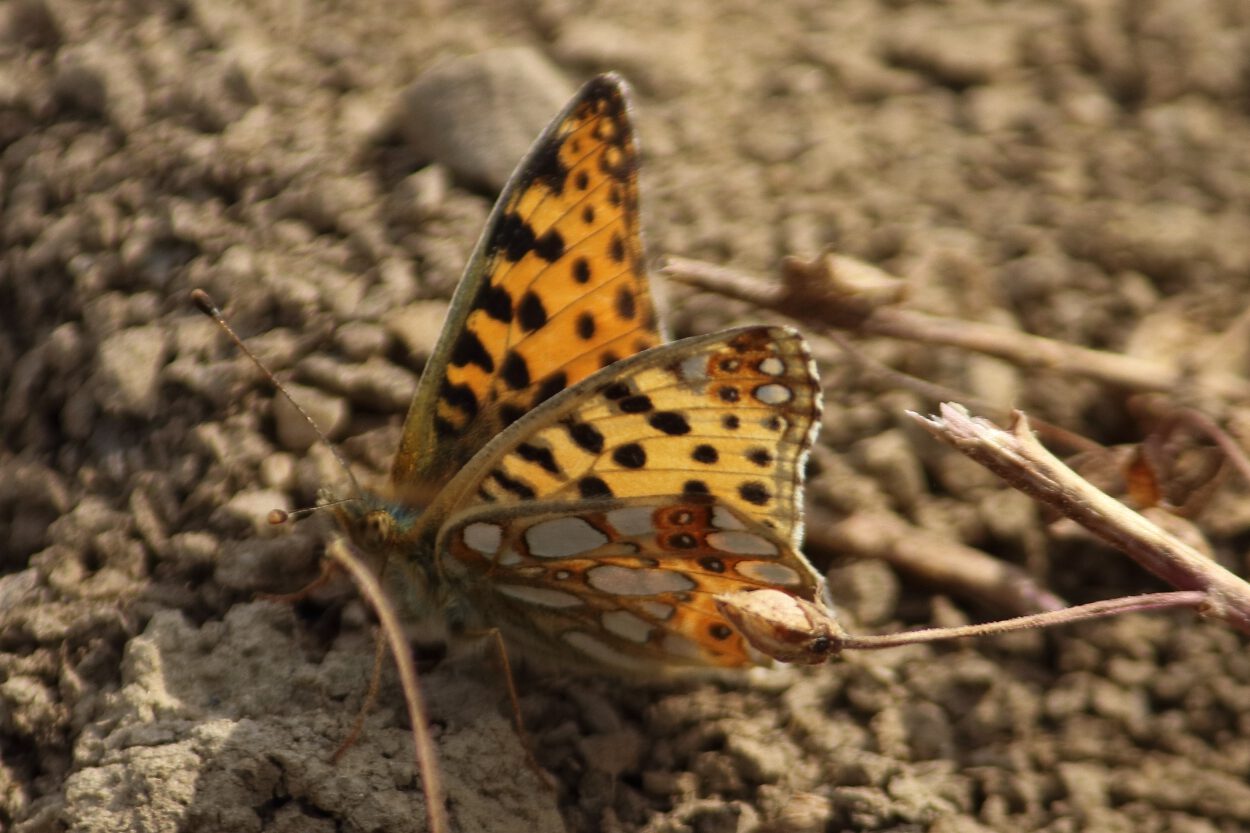
Pearl-bordered fritillary (Boloria euphrosyne)
Small “pearlescent” wing spots are visible on the orange underside of the hind wings. The upper side is orange in color and covered with small black spots. The moths have a wingspan of between 32 and 40 mm. The butterfly is already classified as an endangered species on Germany’s Red List.
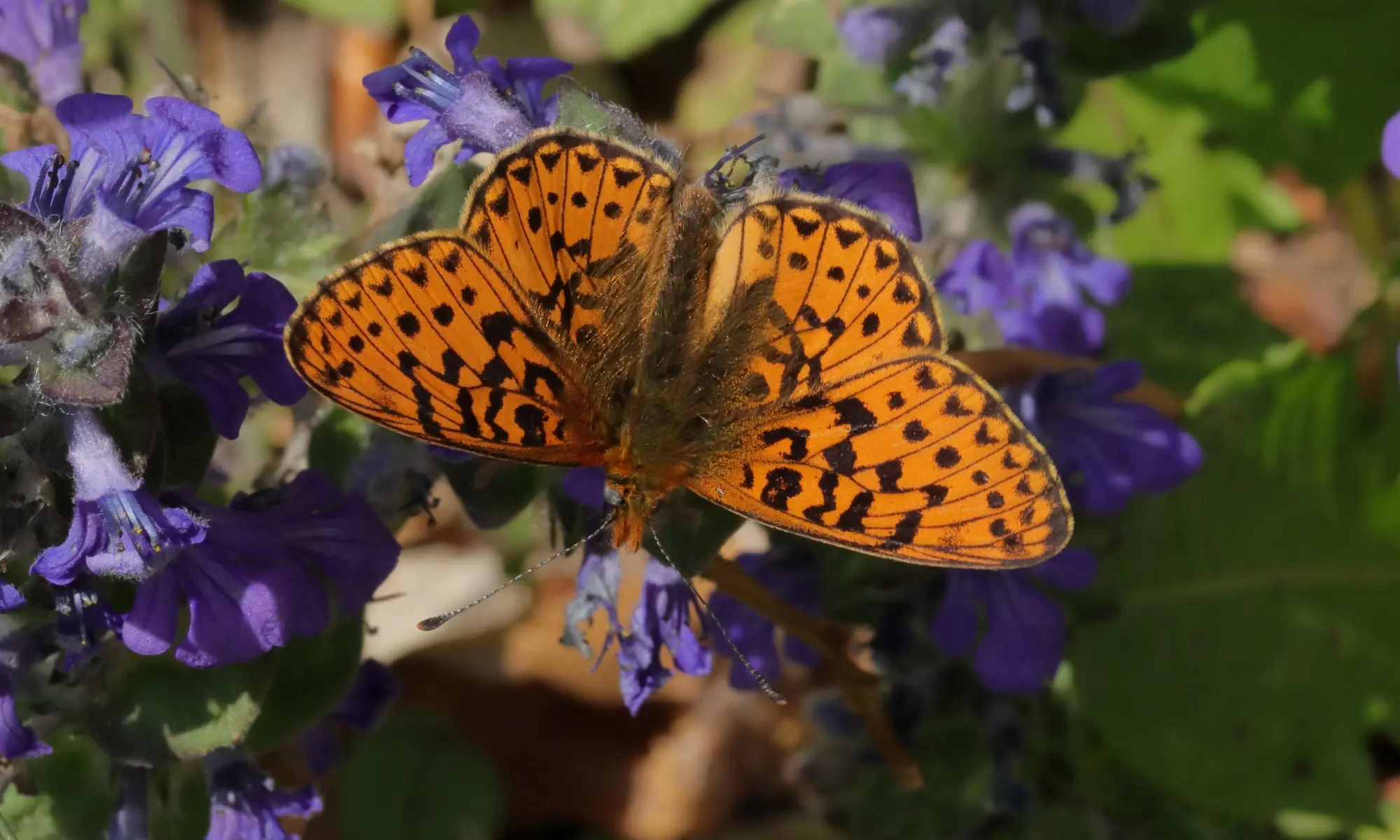
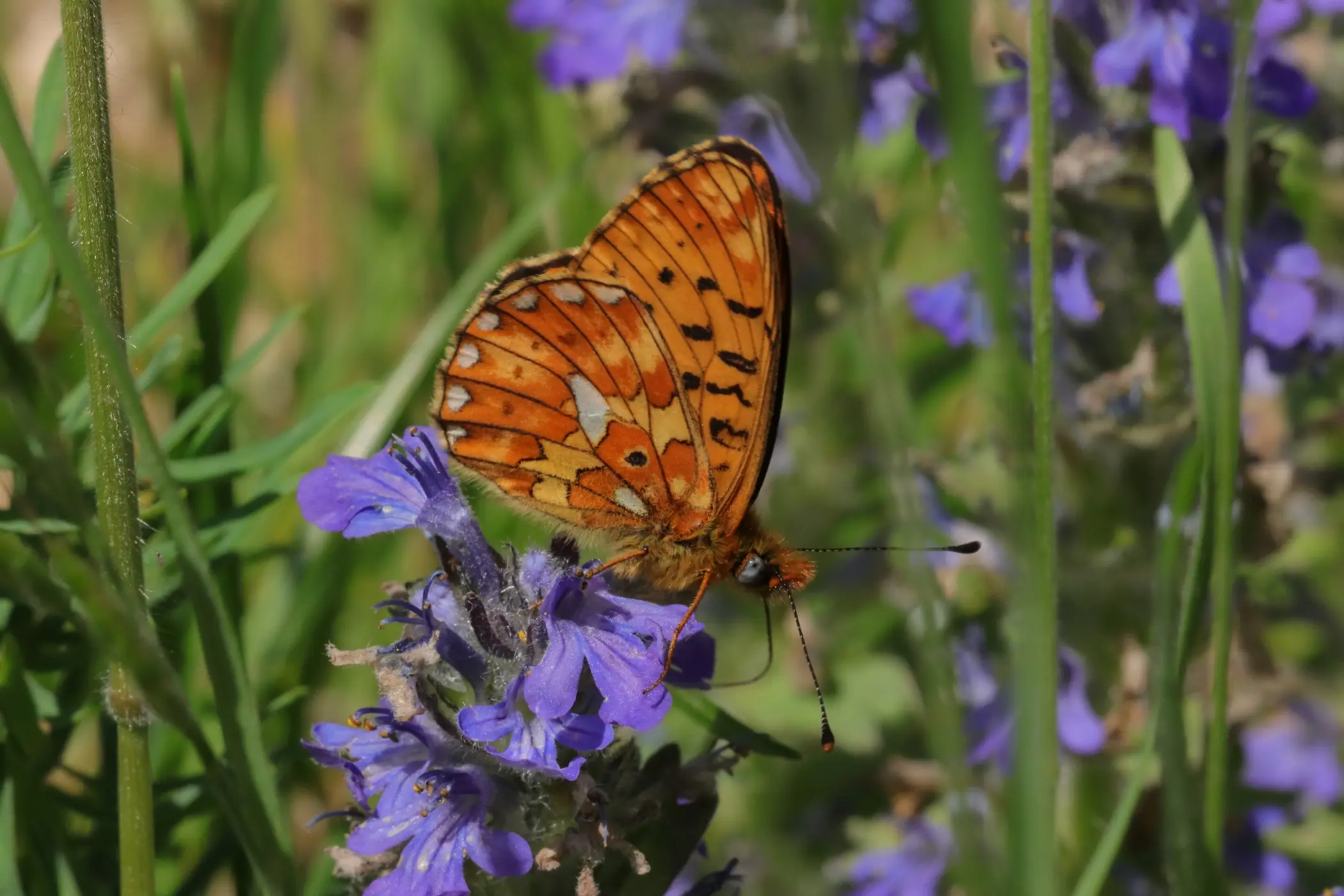
The caterpillars of the pearl-bordered fritillary feed on violet species, among others. The butterflies are mainly found on the flowers of creeping bugle (see also the pictures above).